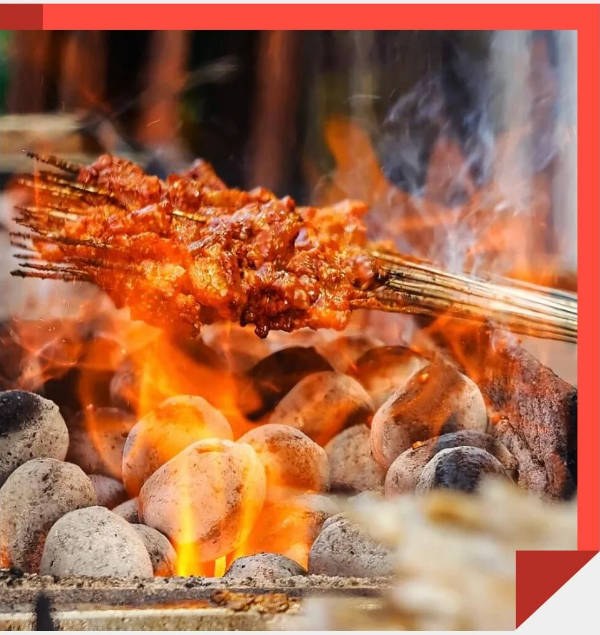
1. For authentic barbecue, head to Northwest China
4 standout features captivating foodies nationwide
If China's beauty were divided into ten parts, seven would reside in the northwest.
Whenever you think of highlands, mountains, deserts, oases, grasslands, or Gobi—each evokes vast, majestic landscapes. Yet Northwest China seamlessly blends these elements into a single, breathtaking panorama.
Across its vast expanse, fierce winds and sandstorms rage. Northwest men ride horses through the gales, large wineskins in hand, freshly hunted game on their saddles. Galloping under the sun, they embody a rugged, athletic beauty.
The same holds true for Northwest barbecue. The people who make it define what it serves. Food most vividly reflects regional character. Barbecue in the water towns of Jiangnan is delicate and refined, served in modest portions, dainty and intricate. Northwest barbecue, however, is bold and robust, generously portioned, unadorned. A bite of meat, a sip of liquor—it’s a spirit that soars to the heavens.
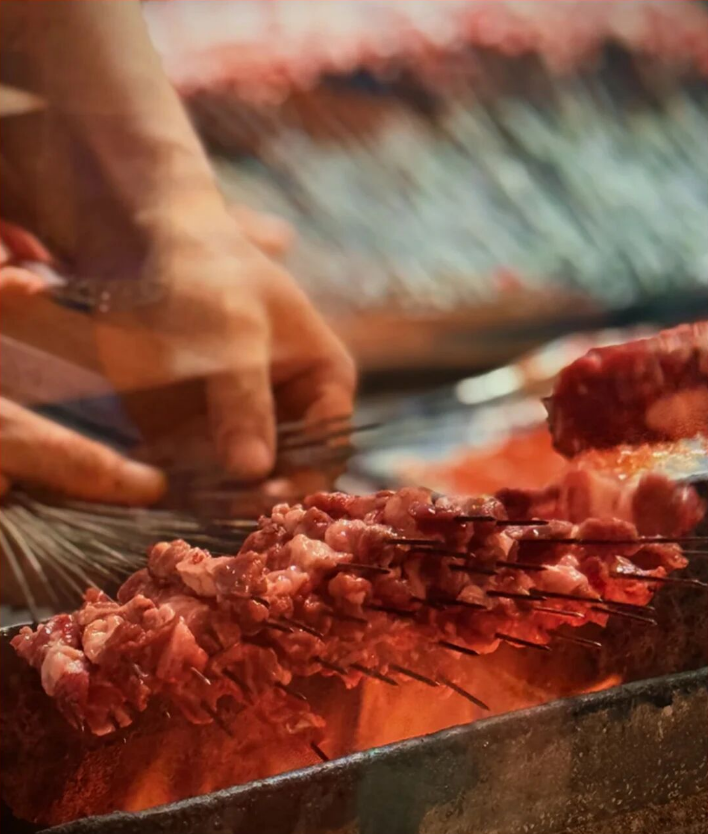
Northwestern barbecue, much like the temperament of its people and the landscape of the region, boasts distinctive characteristics.
First, the ingredients are unique. Northwesterners favor beef and mutton, using a rich variety of seasonings like red onions, chili peppers, and lemongrass. In Shaanxi, people also enjoy Yellow River carp.
Second, the tools are distinctive. Take Xinjiang barbecue, for instance, which often uses red osier wood skewers. This is because red osier trees are ubiquitous in Xinjiang—a prime example of utilizing local resources, a common practice in Chinese culinary traditions.
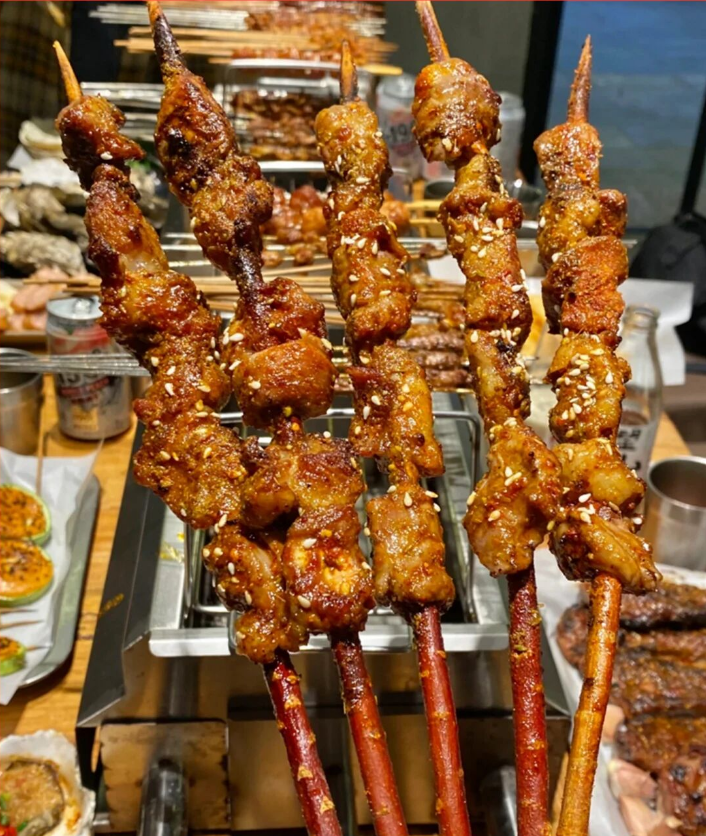
While foodies savor the delicious meat, they also taste the aroma of red willow trees. The rich meat flavor carries a hint of botanical notes, creating a uniquely special taste.
Additionally, Xinjiang has a distinctive cooking tool called the “naan pit oven.” It can handle everything from roasting whole lamb to baking small buns, making it a signature culinary artifact unique to Xinjiang.
Thirdly, the fuel is distinctive. Northwest barbecue uses charcoal made from poplar wood. This wood is sturdy, burns efficiently, and provides even heat, making grilling convenient and economical. Moreover, the smoky aroma from poplar wood is uniquely pronounced, imparting a memorable fragrance to the grilled meat.
Finally, the flavors are bold. Northwest grilled dishes often feature generous seasoning, leaning heavily into spicy and salty profiles. This reflects the region's rugged environment—both heat and saltiness provide the perfect excuse for the hearty Northwest folk to take a big gulp of their favorite drink.
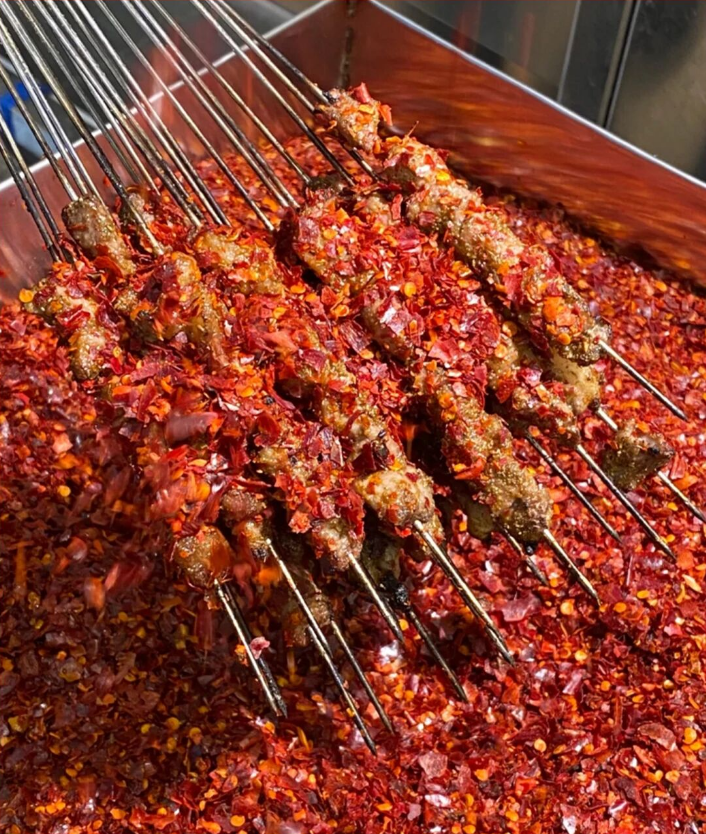
The beauty of Northwest barbecue lies in its wild spirit. “First meat, second charcoal, third chili—cumin, rock salt, and red osier skewers” embodies the very essence of this culinary tradition.
With its distinctive character, Northwest barbecue is gradually spreading across the nation. This unpretentious style of grilling resonates deeply with the free-spirited ethos of today's youth.
2. Five Major “Battle Zones” of Barbecue, Each with Its Own Unique Skills
In the vast northwest, every step reveals breathtaking scenery—the desolate Gansu, the expansive Qinghai, the mystical Ningxia, the boundless Xinjiang, and the culturally rich Shaanxi.
The barbecues across the northwest regions each boast their own unique skills.
Take Shaanxi barbecue, for instance, which centers on beef and mutton. Its grilled lamb skewers and lamb tendons are particularly renowned for their exquisite flavor. Shaanxi lamb skewers are meticulously prepared, with special attention paid to balancing lean meat and fat to ensure a rich, layered texture.
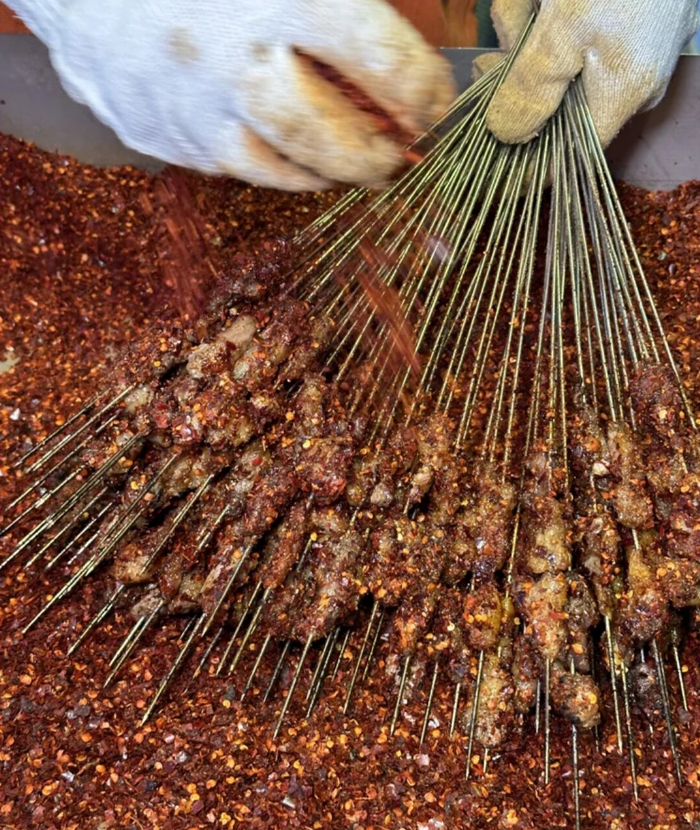
Additionally, when cooking, Shaanxi lamb skewers incorporate local specialty seasonings like dried tangerine peel and fennel to enhance their flavor profile.
As a province rich in carbohydrates, Shaanxi locals enjoy pairing grilled meats with steamed buns. Once skewered meat is cooked, it's sprinkled with sesame seeds and cumin before being tucked into a bun. With a quick squeeze to remove the skewer, the bun's aroma envelops the meat's savory notes, while cumin layers upon smoky flavors. The fusion of fats and carbs creates an exuberant dance of bun fragrance and meaty richness—a truly comforting experience.
Spanning over 1,600 kilometers and three climate zones from north to south, Gansu is one of China's five major pastoral regions, boasting an abundance of lamb resources. Varieties like Dongxiang Small-tailed Han sheep, Baiyin Jingyuan Tan sheep, Wuwei Jiutailangxiang sheep, Longdong Black mountain sheep, and Ganjia sheep each carry their own distinct grassy aroma. These premium ingredients provide Gansu barbecue with immense room for creativity and expression.
Gansu barbecue masters favor open flames. As skewers dance through billowing tongues of fire, onlookers may wince, fearing charred, inedible results. Yet seasoned grill masters remain utterly unfazed. While casually chatting, they effortlessly perfect this culinary delight.
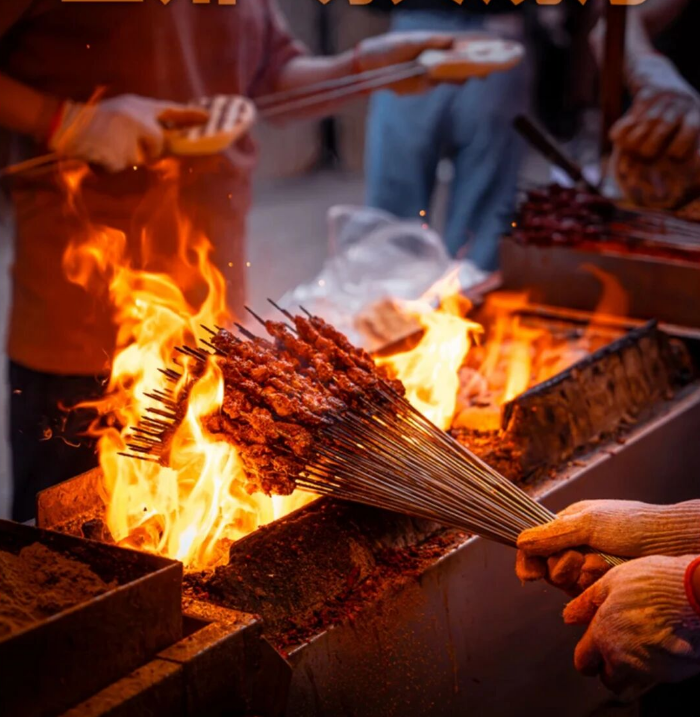
Gansu's chili powder deserves special mention. Most local barbecue joints grind it by hand, a process less refined than machine grinding. This method preserves coarse bits of chili skin and seeds, which add depth to grilled meats when combined. Naturally, each shop's technique varies, resulting in unique flavors.
Xinjiang's barbecue is the most unrestrained. In popular perception, everyone in Xinjiang eats whole roasted lamb, especially paired with roasted naan. The crispy bread and savory meat dance together, sending you straight to heaven.
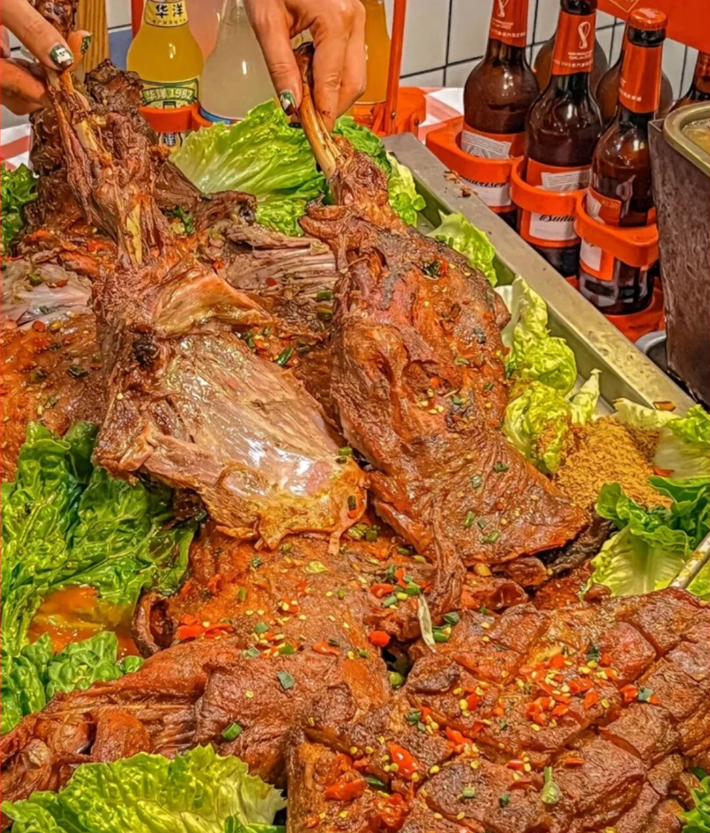
As mentioned earlier, red willow wood and naan pit roasted meat are Xinjiang specialties. The meat chunks used locally are larger than typical grilled cuts, and when slow-roasted in the naan pit, they develop an intensely rich flavor. Each bite delivers profound satisfaction.
Of course, Xinjiang barbecues are all about singing and dancing. As the rich aroma of meat wafts from the charcoal grill, ethnic melodies fill the air, and graceful dance moves captivate the eyes—this barbecue experience is truly worth every moment!
On Ningxia's barbecue menu, lamb remains the star, especially the renowned Ningxia Tan sheep—truly the finest breed. Free from any gamey or pungent taste, the skewered meat is succulent, perfectly balanced with lean and fatty layers. Crispy on the outside, tender within, it offers an exceptional texture and flavor.
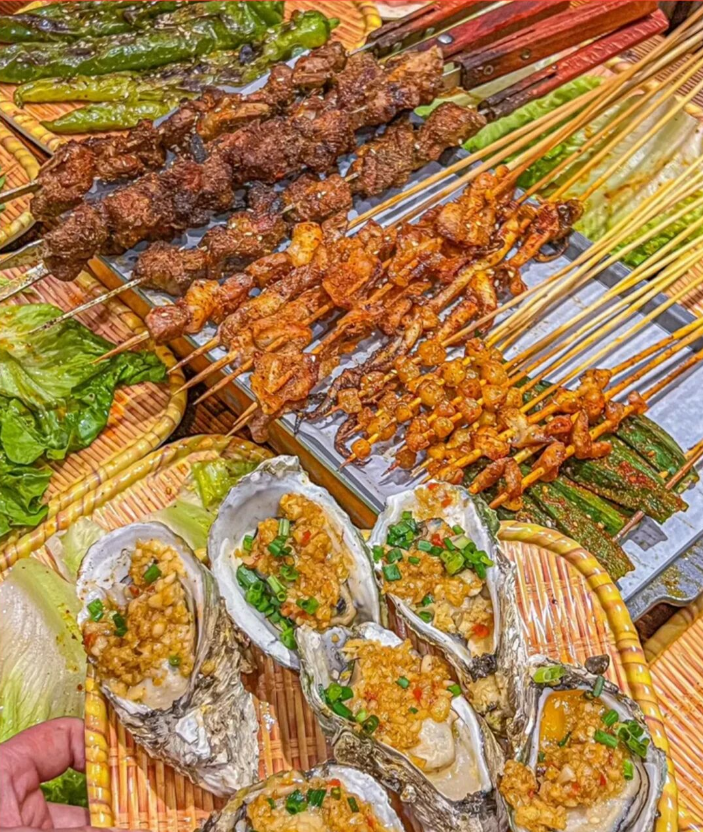
Besides mutton, Ningxia locals also enjoy grilled seafood like oysters, shrimp, and scallops. Ningxia barbecue is characterized by its unique seasoning and smoky flavor. Mutton skewers typically require only simple salt and cumin seasoning to bring out their ultimate savory taste, as the high-quality mutton from Ningxia achieves deliciousness without excessive seasoning.
In Qinghai, beyond the essential lamb skewers, grilled lamb intestines, grilled lamb tripe, and grilled beef tendon are also signature dishes. Grilled lamb intestines, for instance, aren't simply cleaned and roasted. Instead, they're coated with lamb blood and minced meat, then dry-fried. This method yields a crispy exterior with a tender, smooth lamb blood filling. Grilled lamb tripe features a crispy outside and tender inside, offering a satisfying crunch. Grilled beef tendon boasts perfectly balanced saltiness and spiciness, offering a satisfying chew while remaining tender and juicy. These signature grilled items not only deliver exquisite flavor but also preserve the ingredients' natural essence.
Similar to Gansu-style grilling, Qinghai barbecue enthusiasts favor open flames. Skewered meats are skillfully handled by chefs who deftly maneuver them in and out of the fire, flipping and tossing them with precision. When dining on Qinghai barbecue, you won't have to worry about slow service—it's less about grilling and more about cooking to perfection.
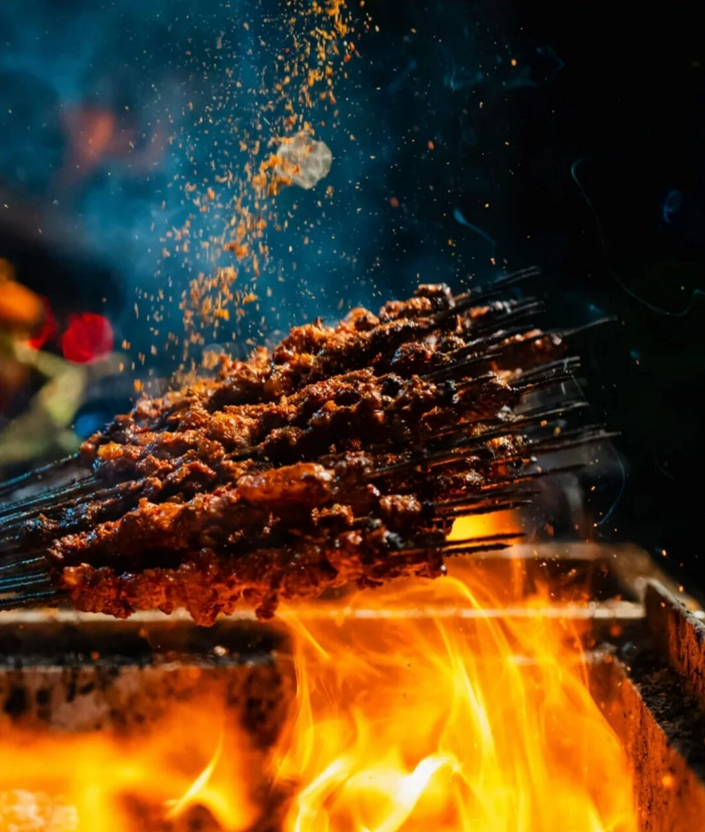
The vast expanse of Northwest China boasts abundant beef and mutton resources, and locals naturally gravitate toward showcasing these meats. As essential ingredients in the barbecue industry, both the selection of beef and mutton and the methods of preparation demand meticulous refinement.
Therefore, when it comes to barbecue, a trip to the Northwest is truly worthwhile.