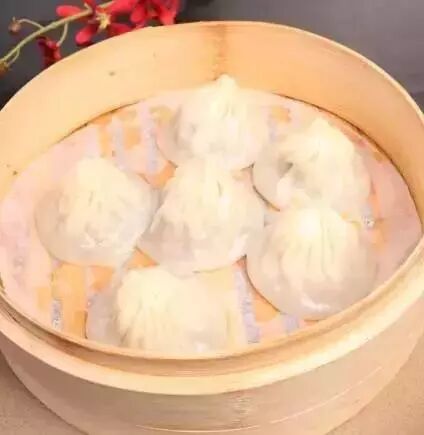
Preparation:
1. Prepare the filling:
Place minced pork from the hind leg in a bowl. Add minced ginger and salt, then mix thoroughly by hand. Drizzle in water and continue stirring in one direction until fully incorporated and absorbed by the meat. Add MSG, chicken powder, ground pepper, and sugar. Knead vigorously for 5 minutes until the mixture becomes sticky and develops small bumps on the surface. Stir in minced pork skin jelly and set aside.
2. Dough Preparation:
In a bowl, combine all-purpose flour, salt, egg white, and water. Gradually stir into a flaky mixture, then knead into a smooth dough. Rest for 30 minutes. Roll out with a pasta machine into a smooth sheet. On a work surface, roll thinly, then twist into a rope. Divide into portions and roll each into wrappers.
3. Dough Filling:
Curl the four fingers of your left hand slightly to hold the wrapper. Place the filling in the center and press firmly. Lift the edges with your right thumb and index finger, pinching to create pleats. Use your left thumb to gently press down on the filling while your index and middle fingers support the wrapper. Slowly rotate the wrapper with your left hand in sync with your right hand's movements. When closing the opening, hold the bun firmly with your left hand and rotate it gently until your right hand seals the opening tightly. Give it a light tug to ensure the filling settles neatly inside the wrapper, then place it in the steamer basket.
Serving Procedure:
Place the prepared xiaolongbao in a steamer and cook over high heat for 7 minutes until done. Remove when the dough skin is translucent and delicate, with the broth clearly visible inside. Serve immediately with vinegar on the side.
Technical Key Points:
1. For the filling, use pork hind leg meat with moderate fat content and slight chewiness for optimal texture.
2. Add salt first when mixing the filling; this accelerates the binding process during kneading. Incorporating sugar significantly enhances the filling's savory flavor.
3. The optimal pork-to-pork-skin-gelatin ratio is 1:1, yielding a perfectly balanced, richly flavorful broth that complements the meat filling.
Modern Pork Skin Jelly: 60% Cost Reduction
Pork Skin Jelly Preparation:
1. Place pork skin with fat scraped off into a pot and blanch over high heat. Once boiling, skim off scum and continue cooking for 5 minutes until the skin turns black and hardens. Remove and rinse thoroughly under running water. Blanch diced pig's feet over high heat for 3 minutes to remove any odor, then rinse under cold water and set aside.
2. Grind the pork skin into small particles using a grinder, then transfer to a soup pot.
3. Add the pig's feet, scallion segments, ginger slices, and water. Bring to a boil over high heat, then reduce to medium heat and simmer for 6 hours. The broth should become thick, white, and viscous, holding its shape when ladled and falling in a straight line at a steady pace. Strain through a fine mesh sieve to remove solids. Pour into a bowl and let cool naturally. Refrigerate at approximately -2°C for 2-3 hours until fully set into jelly.
4. Remove the pork skin jelly, cut into small pieces, and grind into soybean-sized particles using a meat grinder. Set aside.
Technical Key Points:
1. Thoroughly scrape all fat from the pork skin. Otherwise, the resulting broth will be overly greasy, making the xiaolongbao filling less refreshing.
2. Blanch the pork skin thoroughly to completely eliminate any off-flavors.
3. When simmering the broth, observe three points: First, use medium heat; second, maintain heating for a full 6 hours; finally, strain the finished broth to remove all solids. Only then will the pork skin jelly become crystal clear, and when minced, yield distinct, elastic granules.
4. After blanching, mince the pork skin into fine particles before using it to thicken the broth. This significantly reduces cooking time and saves costs.
5. Use a 1:2 ratio of pork skin to water. Once cooled, refrigerate the broth—never freeze it. Freezing causes it to release excess water upon thawing, resulting in a watery broth known as “diluted soup.”