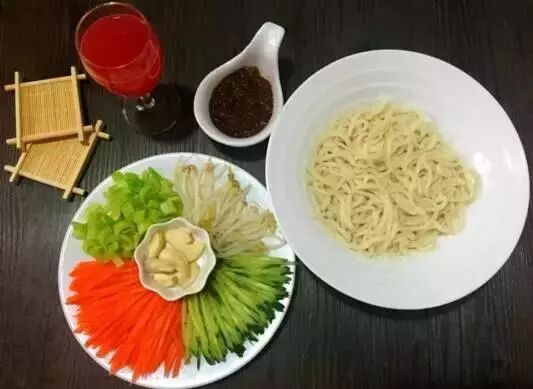
Homestyle Old Beijing Zhajiang Noodles Recipe:
1. Prepare noodles, scallions (as needed), ginger (as needed), pork belly (as needed), sweet bean sauce (as needed), oil (as needed), dry yellow bean paste (as needed), warm water
2. Slice the white part of scallions vertically, remove the core, cut into strips, then chop finely. Wash ginger, peel, slice into thin strips, then mince finely
3. Remove the skin from the pork belly, wash thoroughly, and dice into small pieces. Separate the lean and fatty meat portions. Place the fatty meat in a bowl. Add the dry yellow bean paste to a separate bowl and gradually mix in the warm water while stirring.
4. Add the sweet bean sauce to the yellow bean paste mixture and stir until well combined. Heat oil in a wok until warm. Add the fatty meat and stir-fry continuously until it shrinks.
5. Add lean pork and stir-fry until it changes color. Add minced scallions and ginger, stir-frying until fragrant. Pour the prepared sauce mixture into the pan, stir to combine, and bring to a boil over high heat for one minute.
6. Reduce heat to low, add sugar, and stir until small bubbles form. Simmer until the mixture turns deep brown and releases a significant amount of oil. Sprinkle with chopped scallions, stir briefly, then turn off the heat.
7. Place flour in a bowl. Add a small amount of cold water and quickly stir until flaky. Stop adding water once a small amount of dry flour remains at the bottom.
8. Knead the flour into a slightly firm dough. Wrap with plastic wrap and let rest at room temperature for 20 minutes. Knead vigorously until elastic.
9. Sprinkle a little cornmeal on the cutting board. Roll out the dough into a flat pancake, then stretch it into a thin sheet. Fold it like a fan and cut into strips with a knife.
10. Lift and shake the strips to prevent sticking. Wash the radish, peel, and shred it. Wash the cucumber and shred it. Wash the cabbage, remove the core, and shred the inner leaves.
11. Clean the green garlic, remove any dirt and tough outer leaves, then slice thinly. Wash the celery, remove the core, and mince finely. Bring water to a boil in a pot.
12. Add the cabbage core, mung bean sprouts, minced celery, edamame, and soaked soybeans. Blanch until tender, then drain and serve.
Tips
1. For delicious jajangmyeon, choose pork belly with both lean and fatty parts. This ensures the meat cubes develop a rich, savory flavor. If concerned about excess fat, opt for other marbled cuts, but ensure they contain some fat to prevent the sauce from becoming dry and bland.
2. The sauce is the soul of zhajiang, so authentic yellow bean paste is essential. Adding a bit of sweet bean paste creates subtle sweetness and depth.
3. Scallions are essential for fried sauce, but only use the white part. Finely chop them into scallion greens. Opt for Beijing scallions or large scallions for a sweet, robust flavor.
4. Add just a pinch of sugar to the fried sauce for depth. This creates a rich, well-rounded taste that's not solely salty.
5. Dry-fried minced pork must be served with hand-rolled noodles. Opt for high-gluten flour for a more resilient texture.
6. For thin noodles, use corn flour to prevent dough sticking. This allows easy separation after preparation and prevents overly sticky broth during cooking.
7. Oil is essential for the fried sauce, but use sparingly—excess oil makes it greasy. A small amount should fully incorporate into the sauce.
8. Choose seasonal vegetables like napa cabbage, bean sprouts, celery, radish, or cucumber—all common ingredients.