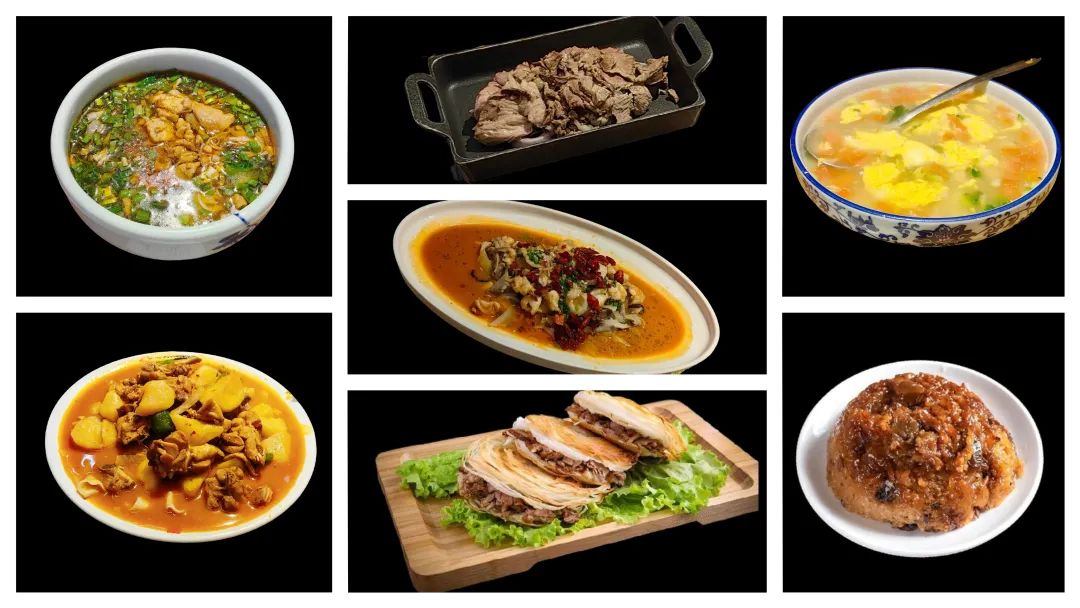
How delicious is Northwest cuisine? I can't quite put it into words. Having lived in Shanghai for 30 years, my palate has gradually adapted to the rich, savory flavors of authentic Shanghai cuisine. Now I find myself seeking out distinctive regional dishes beyond the typical Shanghai fare. And there it was! Qin Xiang Ge, specializing in Northwest cuisine, became the destination for my family and me to explore something new. Upon seating, I scanned the surroundings. The decor offered no obvious Northwest flair—four-seat booths reminiscent of Hong Kong-style cafes. QR codes on each table enabled quick, convenient ordering. Unfamiliar with Northwest cuisine, we selected dishes based on our imagination to showcase here. Having previously covered Northwest cold dishes, this installment focuses on hot dishes. All photos taken at Qin Xiang Ge.
I. Big Plate Chicken
When discussing Big Plate Chicken, Xinjiang must be mentioned. Xinjiang is the birthplace of this dish. Originating in the 1980s from roadside eateries catering specifically to passing truck drivers, it's a fusion “street-style dish” blending Xinjiang and Sichuan flavors. Large chunks of chicken are stewed with potatoes and chili peppers, served over Xinjiang belt noodles at the base of the plate upon request. The noodles absorb the rich chicken broth, creating a uniquely satisfying texture. Many regions have adapted Xinjiang's large plate chicken recipe with their own twists. For instance, Xi'an-style large plate chicken is served with noodles or steamed buns, creating a distinct noodle-based culinary tradition. Zhengzhou-style large plate chicken pairs with braised noodles, forming the unique “two-mix” eating style. In Yuncheng, Shanxi, it's served with various staples like hand-pulled noodles, twisted dough sticks, instant noodles, or rice, depending on personal preference. Qin Xiang Ge's large plate chicken does not feature noodles at the base.
II. Pulled Lamb
The preparation of pulled lamb is relatively simple, aiming to preserve the meat's natural flavor. Select lamb cuts with a balanced ratio of fat and lean meat, such as leg or loin, as these parts yield tender, juicy meat with superior texture. Simmer the meat in a pot with an appropriate amount of water. Bring to a boil over high heat, skim off any scum, then reduce to low heat for slow cooking. Add ginger slices, scallion segments, cooking wine, and other seasonings to remove any gamey flavor and enhance aroma. When the lamb is about 70-80% cooked, season with salt, pepper, and other spices. Continue simmering until the meat is fully tender and falls apart easily. Diners gather around the table, tearing off pieces of lamb by hand to dip in sauces or sprinkle with cumin powder, chili powder, and other seasonings. Restaurants serve pre-shredded lamb, eliminating the need for diners to tear it themselves. This preparation differs from the lamb served at the Shanghai Fengxian Zhuangxing Lamb Festival. Northwest-style hand-shredded lamb omits the skin, whereas Shanghai-style white-cut lamb is eaten with the skin on.
III. Roujiamo
The roujiamo from Northwest China boasts a unique preparation method and exceptional taste. Its key lies in the meticulous craftsmanship of the braised pork and the bread. First, the bread. This bread is described as “iron ring, tiger back, chrysanthemum heart”—meaning it resembles an iron ring in shape, has a thick, sturdy back like a tiger's, and features a chrysanthemum pattern inside, crisp on the outside and soft within. It is first shaped into a bowl-like dough piece, then baked over charcoal. Now, the braised pork. Rib and leg cuts are simmered with a blend of spices and seasonings until tender and succulent. Traditional recipes often use a rich, aged braising broth passed down through generations, resulting in meat that glows a deep red hue and boasts a deep, savory flavor. The rich meat paired with the crispy bun creates a combination so unforgettable, one bite is all it takes to be hooked.
IV. Fermented Broth Fish
Fermented Broth Fish is a renowned dish from Northwest China. Yellow River carp is scaled, sliced, and blanched. Heat oil in a wok, then stir-fry dried chili peppers, chopped scallions, ginger slices, and garlic slices until fragrant. Pour in fermented broth, bring to a boil, then add the fish slices and glass noodles. Season with salt, sprinkle with shredded garlic chives, and finish with a drizzle of chili oil. A note on fermented vegetable broth: This tangy liquid is made by fermenting celery and assorted vegetables in the leftover water from boiling noodles. Fermented Vegetable Broth Fish evolved from an earlier dish called Fermented Vegetable Broth Fish Dumplings. Originally, this dish featured dumplings shaped like tadpoles, made from fermented vegetable broth and dough. Over time, it transformed into the current version using Yellow River carp.
V. Topping Noodles
Topping noodles are essentially what Shanghai locals call “topping noodles.” Their defining features are: long, thin noodles of uniform thickness; fragrant, savory toppings; a glossy, reddish broth; a tangy-spicy flavor; and a chewy, satisfying texture. Topping Noodles feature diverse, personalized varieties. Sausage Noodles emphasize color coordination: yellow egg sheets, black wood ear mushrooms, red carrots, green garlic shoots, and white tofu. Made with high-gluten flour and finely chopped chili peppers, they incorporate oil-splashed and hot-pot-blanched broth techniques. This creates a visually appealing and delicious dish, offering dual sensory enjoyment. The essence lies in the “shaozi” (minced meat topping), typically made with diced pork, beef, or lamb. The broth prioritizes natural flavors, simmered from meat stock to highlight the ingredients' inherent richness. Shanghai-style topped noodles feature an array of toppings like eel, braised pork intestines, or shredded pork with preserved mustard greens. These toppings are often stir-fried fresh and added directly to the noodles, enriching both flavor and texture.
VI. Tomato and Egg Dumpling Soup
This classic home-style dish from Northwest China combines tomatoes, eggs, and dumplings. Fresh tomatoes, eggs, and flour form the core ingredients. The crucial step involves creating dumplings: flour is mixed with water into small lumps or flakes. During cooking, diced tomatoes are first stir-fried until soft and juicy, then simmered with water. Next, add the noodle dumplings one by one to the pot and cook until done. Finally, pour in beaten egg liquid to form egg flowers. The entire cooking process is simple, quick, and easy to manage.
VII. Zenggao
My first encounter with zenggao was in the TV drama “That Year, Flowers Bloomed and the Moon Was Round.” I've also made this Northwest snack myself. The main ingredients for zenggao include glutinous rice, red dates or honey dates, and sometimes red beans or raisins, all steamed together. The pot used for steaming zenggao is a specialized cooking vessel called a “zeng.” This ancient steamer features small holes in its base. Originally crafted from ceramic, it later evolved through copper → wood → iron iterations. It sits atop a pot to steam food, functioning similarly to a modern steamer. Zeng cake bears some resemblance to Eight-Treasure Rice Pudding but differs in composition. Zeng cake primarily uses glutinous rice, red dates, and red beans—no soaking required—and is steamed directly in the zeng. Eight-Treasure Rice Pudding incorporates a wider variety of ingredients: glutinous rice, beans, candied fruit strips, red dates, assorted nuts, etc. The rice is soaked beforehand, then steamed in bowls using a steamer basket.